As part of a two-day visit, students from the part-time Master of Science program “Public Transportation + Mobility” at UNIKIMS recently visited us at the KIT East Campus to learn about current developments and research activities in the Country to City Bridge project. Presentations, panel discussions, and demonstrations provided participants with practical insights into innovative mobility solutions and current research projects.
Diverse Insights into Research and Mobility
The varied program covered topics from the following areas:
- Mobility Concepts
- Infrastructure and Mobility Hubs
- Vehicle Development
- Visualization and Virtual Experiences
In addition, current challenges and opportunities in the field of mobility were explored. Among other things, the focus was on mobility needs in rural areas, on-demand services, and the role of mobility hubs as interfaces between different modes of transportation.
Another key focus was accessible mobility. Presentations covered approaches to designing vehicles tailored to the needs of people with various mobility impairments, the specific challenges involved in implementing accessibility in passenger cars, and the involvement of users in the development process. Participants discussed current issues and exchanged experiences regarding innovative mobility solutions.
Focus on Mobility in Rural Areas
The second day was devoted to the challenges and potential of mobility in rural areas. In addition to empirical findings on mobility behavior outside urban centers, the agenda focused in particular on discussions regarding on-demand services, mobility needs, and the role of mobility hubs. Participants discussed current issues and shared experiences with innovative mobility solutions.
Experiencing the Future of Mobility
A special highlight was the demonstration of the C2CBridge vehicles. During test drives, students were able to experience vehicles with autonomous driving capabilities up close and learn about innovative mobility concepts.
In addition, the use of XR technologies offered the opportunity to explore mobility solutions in a virtual experience environment. Using XR headsets, participants were able to learn about various vehicle concepts and their use cases, and, in particular, experience aspects of accessibility and inclusion.
A vehicle concept designed specifically to meet the needs of people with limited mobility generated particular interest. During the demonstrations, participants were able to test the barrier-free entry with various wheelchairs in a practical setting. Among other features, the demonstrations included an electrically assisted retraction aid via the rear ramp, systems for securely securing wheelchairs, and solutions for fastening seat belts while the vehicle is in motion. In addition, the use of the integrated folding seat for companions or for repositioning before the start of the trip was demonstrated. The hands-on tests provided a realistic insight into the requirements and potential of accessible mobility.
Valuable Feedback for User-Centered Development
The direct exchange with the students and the practical trials provided valuable insights for the user-centered further development of the concepts. In addition to specific feedback on various usage scenarios, the professional backgrounds of many participants also contributed important perspectives on the use of accessible mobility solutions in public transportation. The feedback received supports the development of future vehicle concepts as well as the design of accessible mobility services in real and virtual application environments.
Further information on the degree program at the University of Kassel (link in German):
Master of Science in Public Transportation & Mobility (M.Sc.) | UNIKIMS
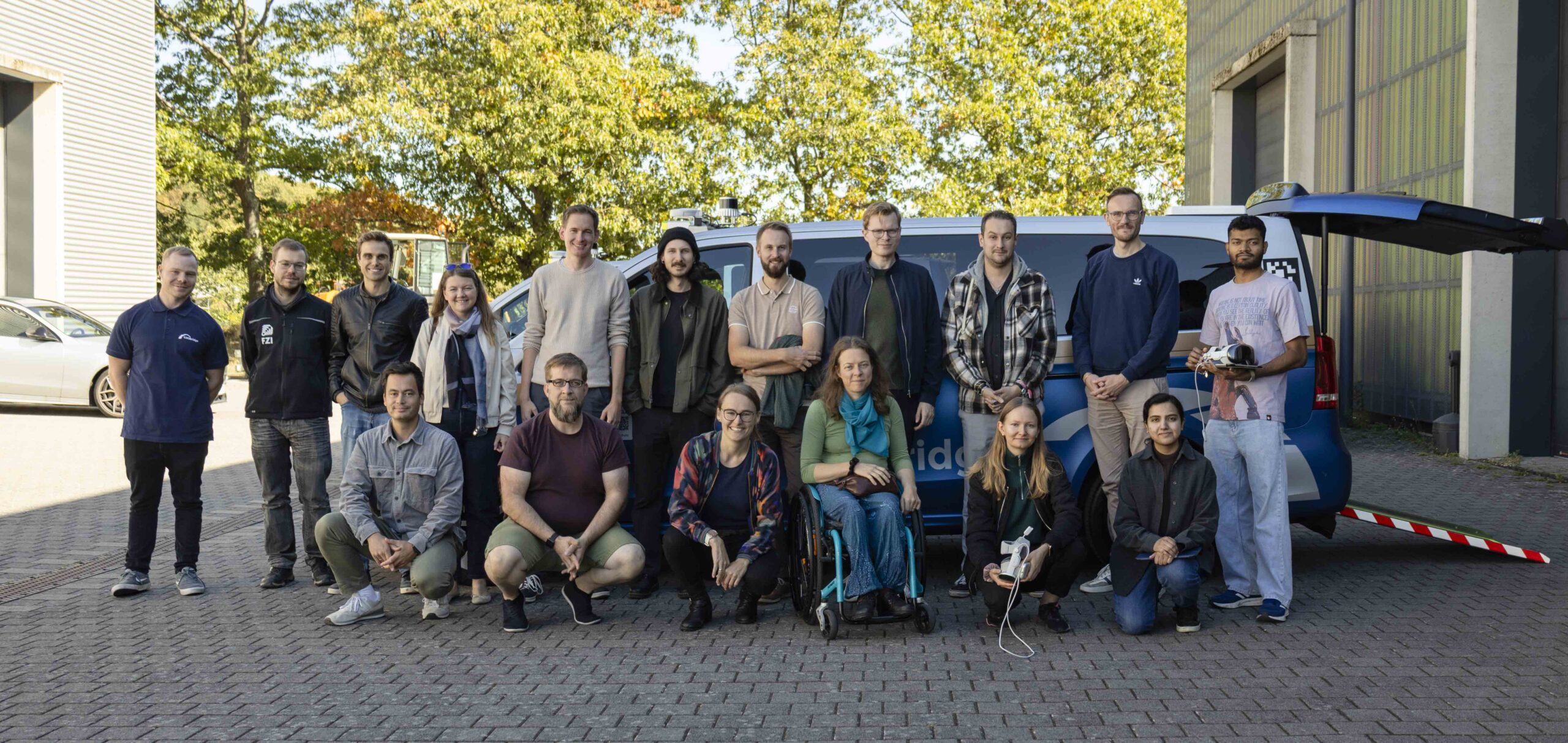
UNIKIMS students with the C2CBridge team at the KIT East Campus
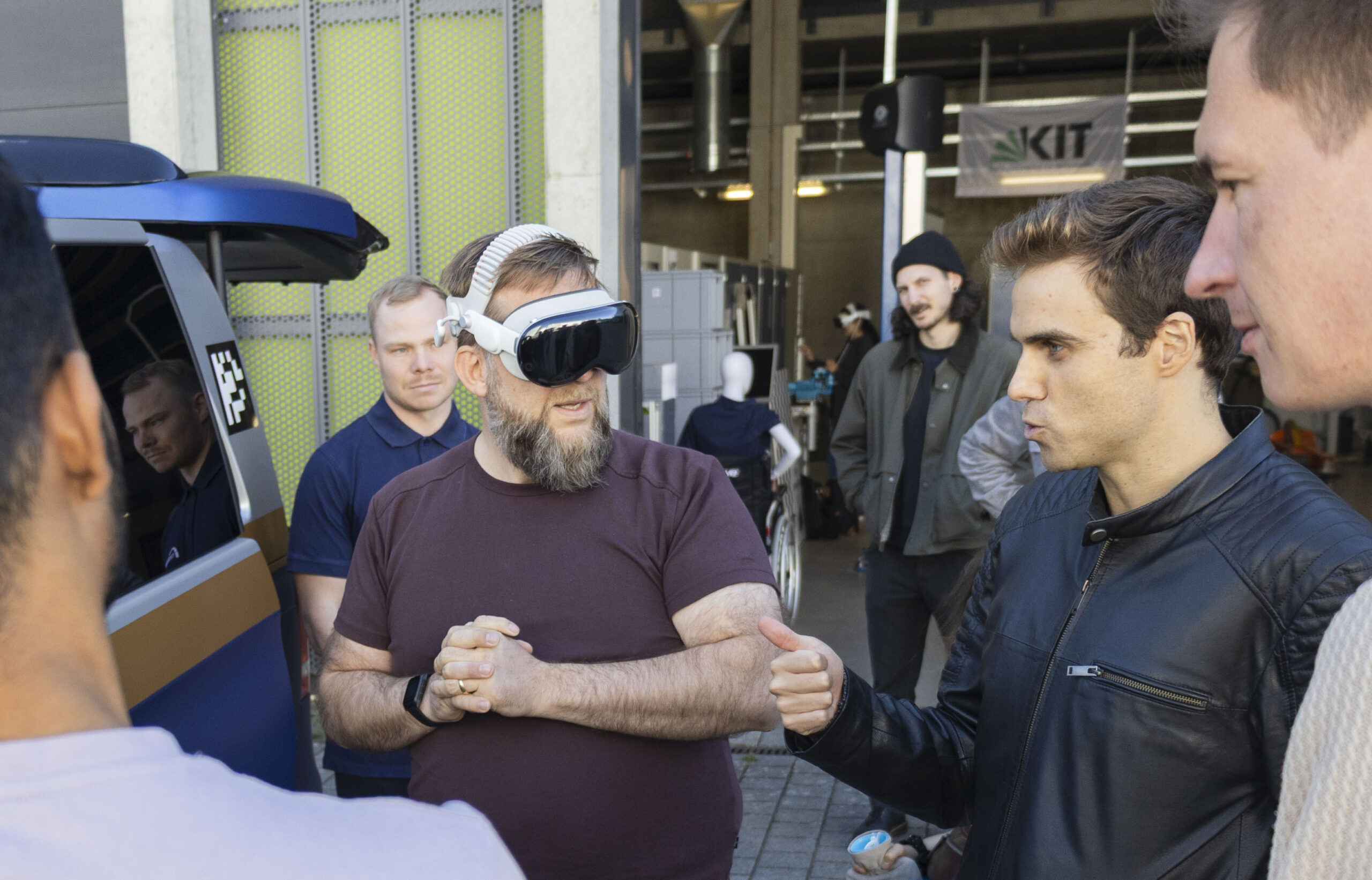
With the help of XR technologies, various vehicle concepts and usage scenarios were explored
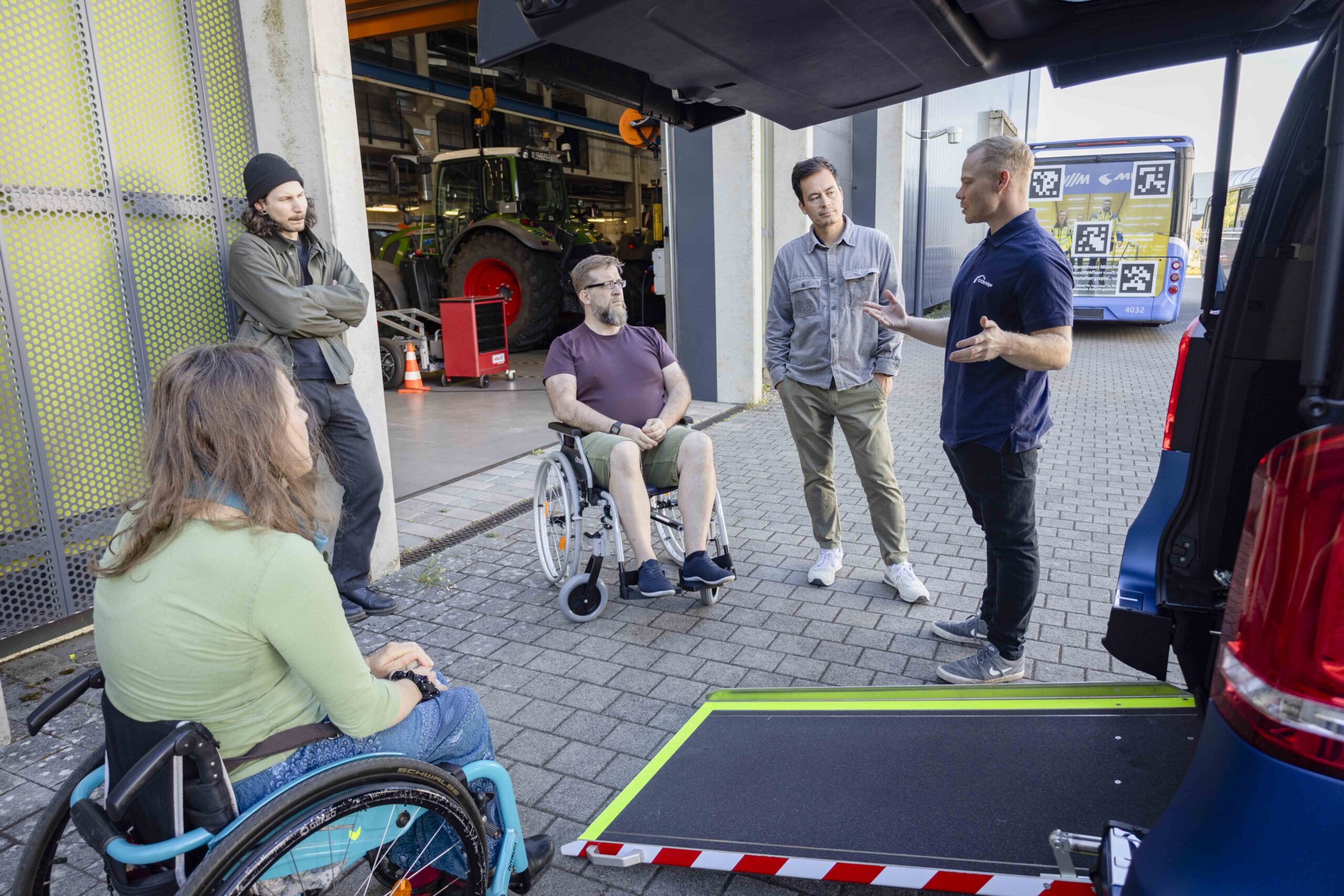
C2CBridge Vehicle Presentation with a Demonstration of Accessibility Features
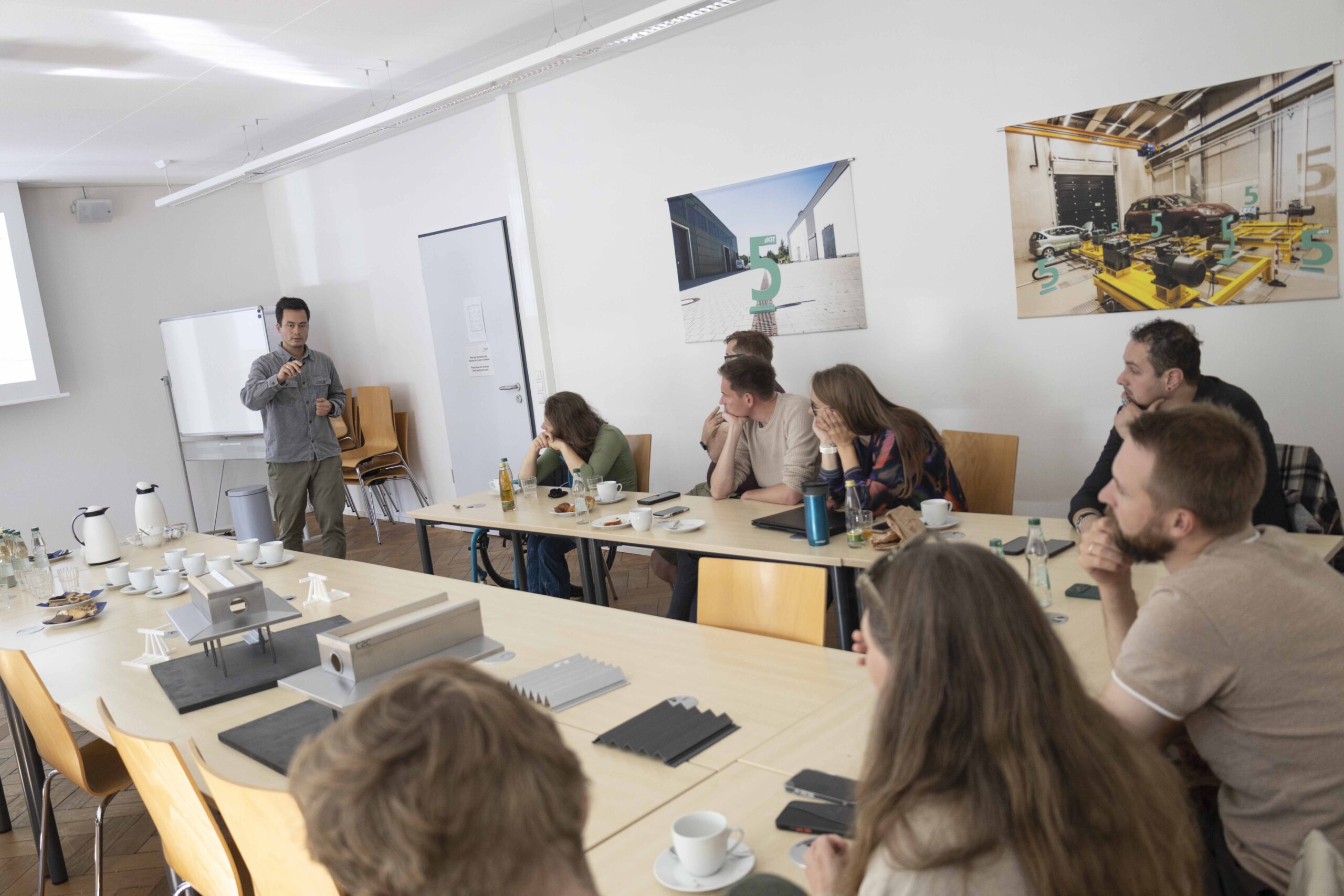
Presentation on the topic of mobility hubs

Stay In Touch